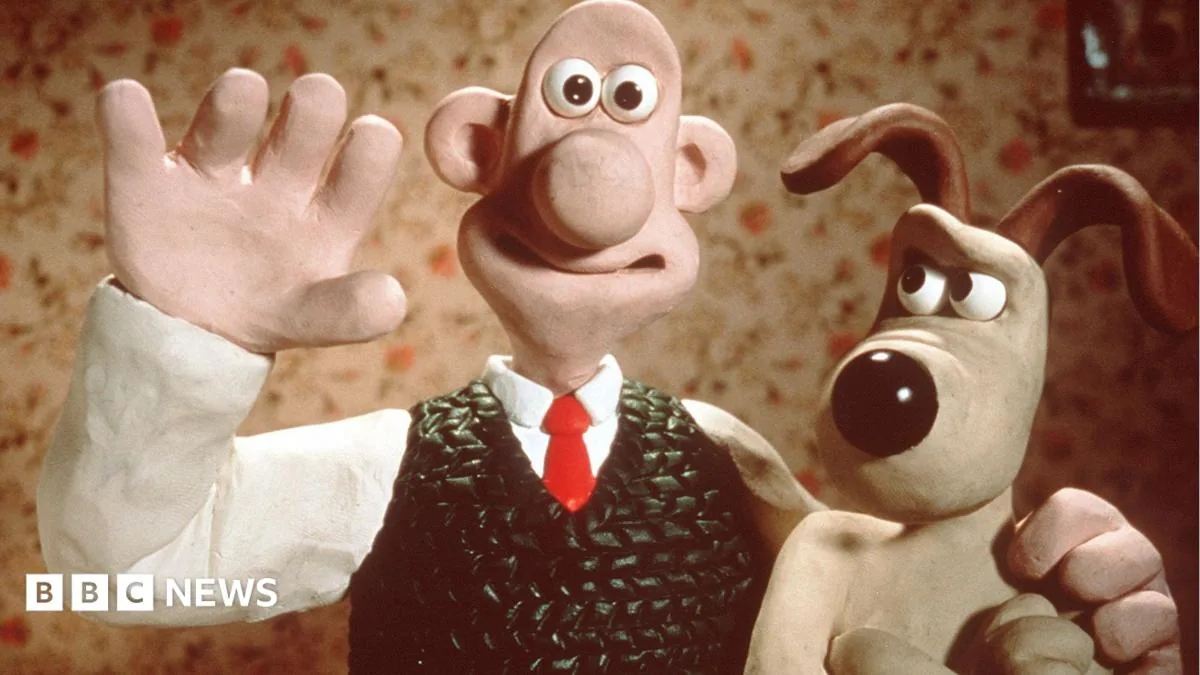
BRISTOL — Gromit was almost a cat, Shaun the Sheep was nearly given a voice, and Chicken Run helped force the Oscars to create a new animation category. Those are among the unexpected turning points to emerge as Aardman Animations marks 50 years since two school friends began experimenting with plasticine and a cine camera.
Founded in 1976 by Sir Peter Lord and Sir David Sproxton, the Bristol studio grew from a teenage hobby into one of Britain’s best-known creative businesses. Its films and characters include Morph, Wallace and Gromit, Shaun the Sheep and Chicken Run, the highest-grossing stop-motion film ever made. Along the way, the company’s biggest successes have often depended on practical choices, creative hunches and a willingness to ignore pressure to do things the usual way.
How Gromit was changed and Wallace and Gromit took off
Nick Park joined Aardman in 1985 while developing A Grand Day Out at the National Film and Television School in London. He had imagined Wallace’s pet as a cat, but the character proved awkward to model in clay.
Park said he began sculpting the cat and quickly decided it was too difficult, so he switched to a dog instead. That simple change helped create one of British animation’s most recognisable partnerships. Sir Peter Lord later said the studio immediately saw Park’s talent when they met him, and described him as a genius.
A Grand Day Out went on to be nominated for an Oscar in 1990, but lost to another Aardman production, Creature Comforts. Lord said the appeal of Wallace and Gromit was obvious because audiences laughed as soon as they appeared on screen, before they had done anything at all.
Chicken Run became a Bristol gamble that paid off worldwide
By the mid-1990s, Wallace and Gromit had made Aardman one of the biggest names in animation, which led to a meeting with Steven Spielberg and DreamWorks chief executive Jeffrey Katzenberg. Lord and the team pitched Chicken Run as The Great Escape with chickens.
The project was risky in several ways. No-one had previously made a 90-minute stop-motion feature from modelling clay, the budget was more than £20 million, and Aardman insisted that every frame would be shot in Bristol. Spielberg responded enthusiastically, according to Park, even joking that he had 300 chickens on his ranch.
The film became a huge commercial hit, taking more than $220 million worldwide and remaining the most successful stop-motion film ever made. It did not win an Oscar, however, because the Academy had no award for animated features at the time. The category was introduced the following year, and Wallace and Gromit later won it for The Curse of the Were-Rabbit.
Shaun the Sheep stayed silent despite pressure to add dialogue
Shaun first appeared in A Close Shave in 1995 and has since become one of Aardman’s biggest international successes. Unlike many animated stars, he has no dialogue, relying instead on bleats, grunts and expressive movement.
Sean Clarke, Aardman’s managing director, said that is exactly why the character works across languages and borders. He said Shaun can be understood anywhere, from Bristol to Outer Mongolia, because the storytelling does not depend on speech.
Yet the studio repeatedly faced calls to give him a voice. Clarke said executives pushed for dialogue when the television series launched and again when Shaun the Sheep Movie was made in 2015, arguing that an 80-minute film could not work without talking. Aardman refused, and Lord said the silence was not a marketing decision but simply what felt best creatively. Clarke said Shaun has now been sold into 170 countries and is especially popular in Asia.
From Aard Man joke to Morph’s long life at the Bristol studio
The company’s origins were far more modest. Lord and Sproxton began making films while still at school, using their father’s cine camera. Their first character was a clumsy superhero figure who fell into holes, and they named him Aard Man as a joke, combining Aardvark and Superman.
To their surprise, the short film was bought by BBC Bristol programme Vision On, and when they were asked who the cheque should be made out to, Aardman Animations was born. After moving to Bristol to work on Take Hart, they embraced plasticine because it was cheap, quick and suited low budgets.
That led to Morph, the shape-changing brown character who could become almost anything. Lord said the figure was so easy to remake that he could squash him into a dog, submarine or bird. Morph remains a fixture at Aardman’s Bristol headquarters, and Lord still reshapes him while chatting in the office.
The latest UK news and stories from MCFC Report.