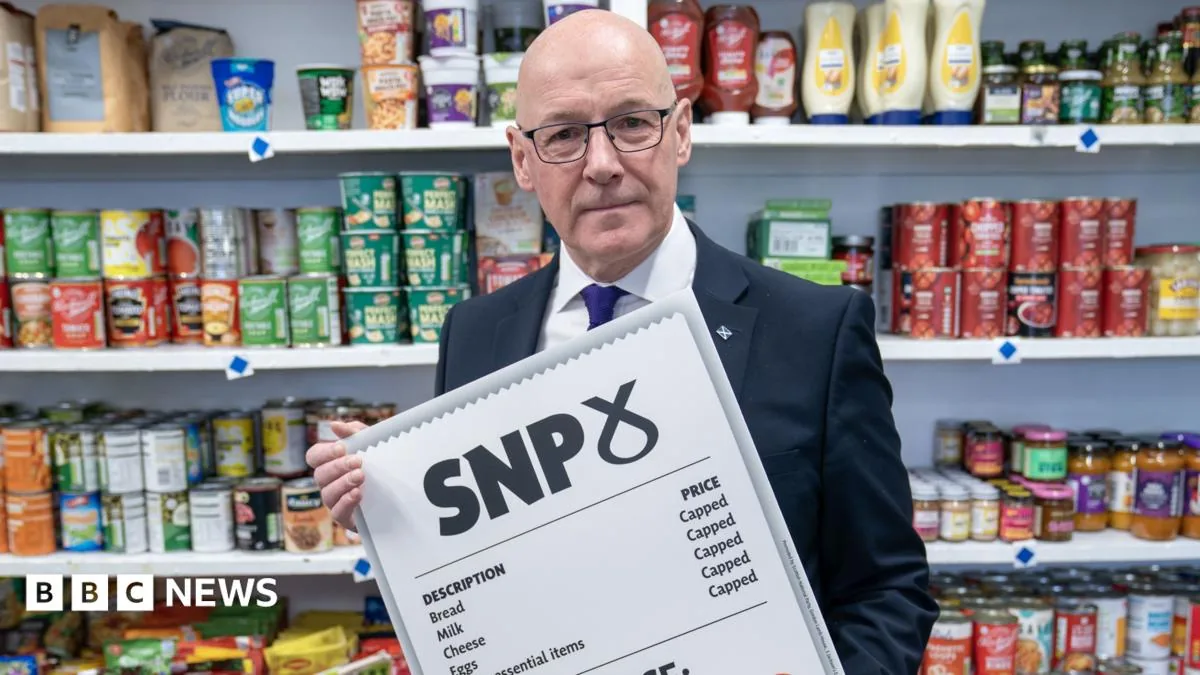
EDINBURGH — Business groups have urged John Swinney to scrap the Scottish government’s plan for a legal cap on some food and drink prices, saying it would be ineffective and could make the cost of shopping worse. Twenty-three organisations have signed a joint letter ahead of the first minister’s programme for government on Tuesday.
The signatories cover retail, food and drink production, manufacturing and distribution across Scotland. Their intervention comes after the SNP’s manifesto promised action to force large supermarkets to limit the price of essential goods such as milk, eggs, cheese and rice in an effort to ease the cost of living.
Swinney has said many people are struggling to afford a basic shop and argued the government has a public health duty to help provide an affordable nutritious diet.
Trade groups say a cap would not cut the causes of higher prices
The letter argues that a statutory cap would not deal with the root causes of elevated food prices. Those pressures include rising production, refrigeration and distribution costs, which businesses say are already feeding through into the price of everyday items.
Among the organisations backing the letter are the Scottish Retail Consortium, Food and Drink Federation Scotland, Scottish Bakers and Dairy UK. They say a legal cap would simply shift costs elsewhere rather than solve food inflation.
Ewan MacDonald-Russell, deputy head of the Scottish Retail Consortium, told BBC Radio Scotland Breakfast that the plan was an “appallingly terrible idea”. He said there was no example he could see of a price cap working properly and warned that any savings at the till could be offset by higher costs elsewhere in the supply chain.
Retailers warn of shortages, court action and pressure on smaller shops
MacDonald-Russell pointed to Hungary as an example of what can happen when price caps are used, saying they can lead to shortages on shelves, domestic products being replaced by cheaper imports and more tension between retailers and customers. The Scottish Retail Consortium also said the policy could leave smaller shops, which are not covered by the proposed legislation, at a competitive disadvantage.
He said Scottish consumers already benefit from among the most affordable food prices in western Europe, and warned the scheme could leave households worse off if businesses have to absorb the cost of running it alongside the cap itself. The letter’s signatories argue that the end result could be a higher overall shopping basket rather than a cheaper one.
Even if Holyrood backed the idea, the plan would likely be open to legal challenge from supermarkets. The groups also say the measure would require changes to the UK Internal Market Act 2020, which was brought in after Brexit to avoid trade barriers and regulatory differences between the four nations.
Scottish government plans consultation and summit with food industry
The Scottish government says helping people with the cost of living remains a top priority. A spokesperson said ministers have welcomed discussion with retailers, food producers and farmers about food price controls and that a consultation will begin shortly.
Officials are also due to hold a summit with food producers and retailers next week to discuss the next steps. The policy question has become politically significant because Swinney is trying to show he is serious about tackling living costs, while critics are warning that the proposal may be more symbolic than practical.
There are still major uncertainties over whether the government could secure any exemption from the internal market rules, and UK ministers have not said whether they would agree. Swinney has previously suggested the process of making law could take about a year, underlining how far the plan would have to travel before it could take effect.
The latest UK news and stories from MCFC Report.